Water Level Monitoring Systems (WLMS)
A water level monitoring system for railway bridges uses sensors to measure nearby water levels in real time. Data is transmitted to a central platform, where it is processed and visualised. Alerts are generated if water levels exceed safety thresholds — enabling timely decisions that ensure bridge safety and operational integrity.

Two important parts of the system
RADAR Sensor
RADAR sensors are widely used for water level monitoring. They emit electromagnetic waves that bounce off the water surface, measuring the time taken for the echo to return. This distance is converted into a water level reading.
Non-contact and highly accurate, RADAR sensors are ideal for environmental monitoring and flood prevention.
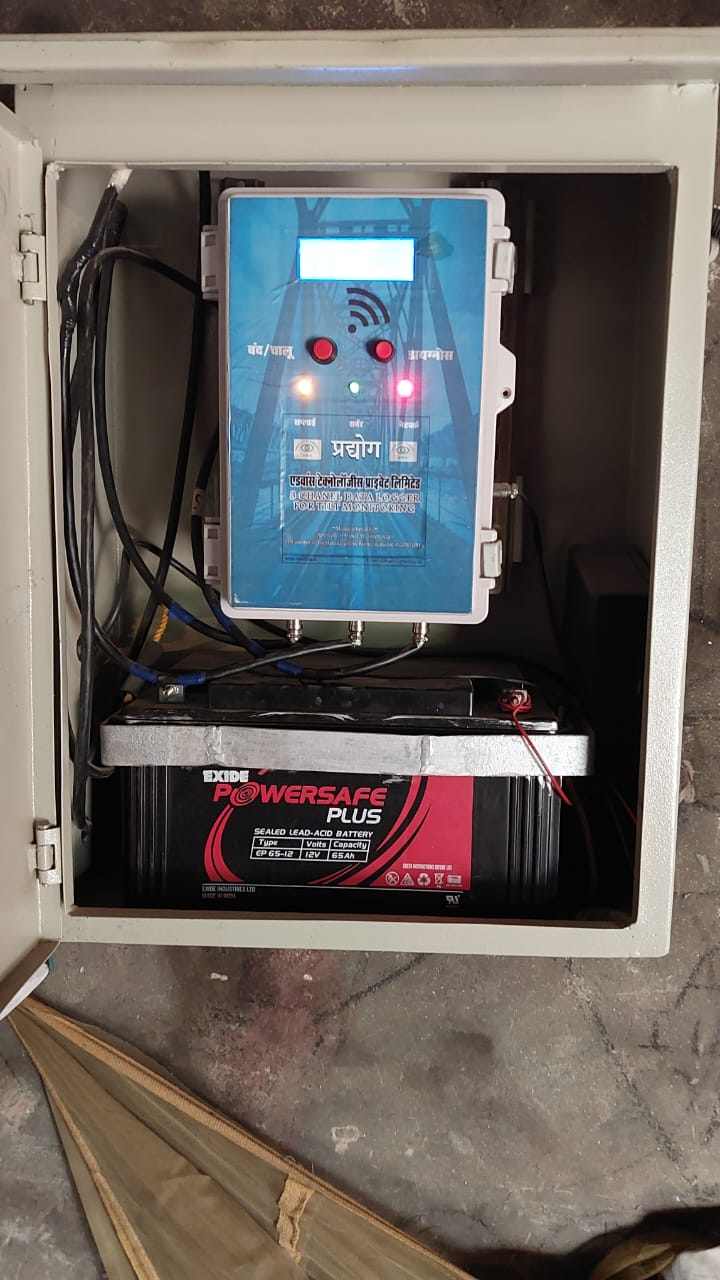
Data Logger
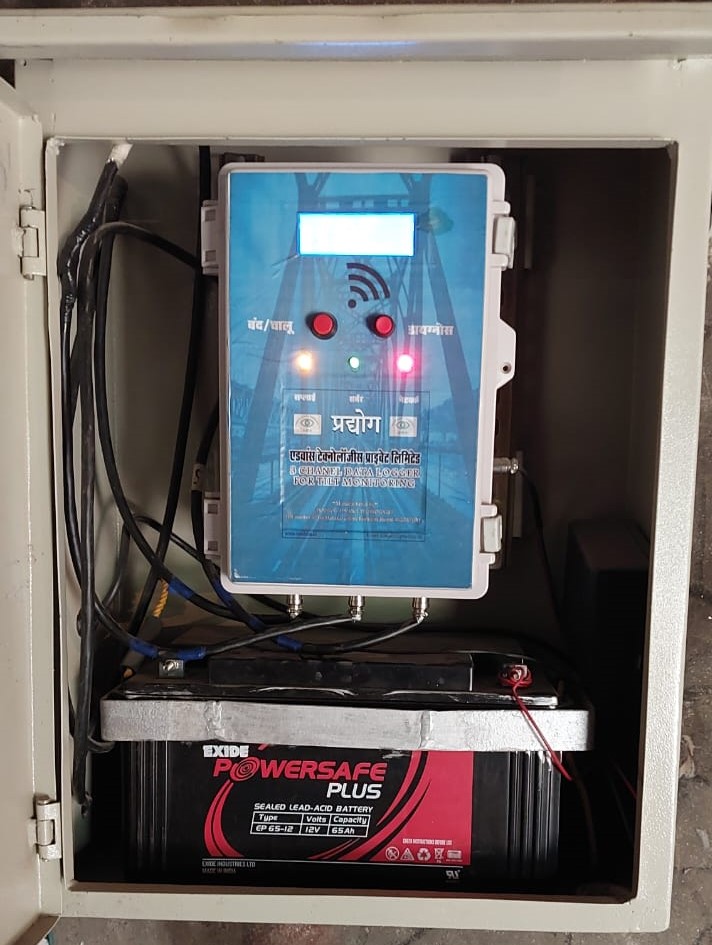
A water level monitoring data logger is the heart of the station — it continuously measures, stores and transmits data in real time to remote systems.
Built for durability, it includes high-water alerts and user-friendly interfaces, aiding effective flood management and environmental monitoring.

From river to dashboard, in seconds
- The RADAR sensor continuously measures the water level below the bridge.
- The data logger records each reading and transmits it to the cloud platform.
- The platform processes and visualises the data on a web dashboard in real time.
- When levels approach safety thresholds, instant alerts go out via SMS, email and app notification — before the danger level is reached.
- Regular maintenance by our team ensures long-term system reliability.
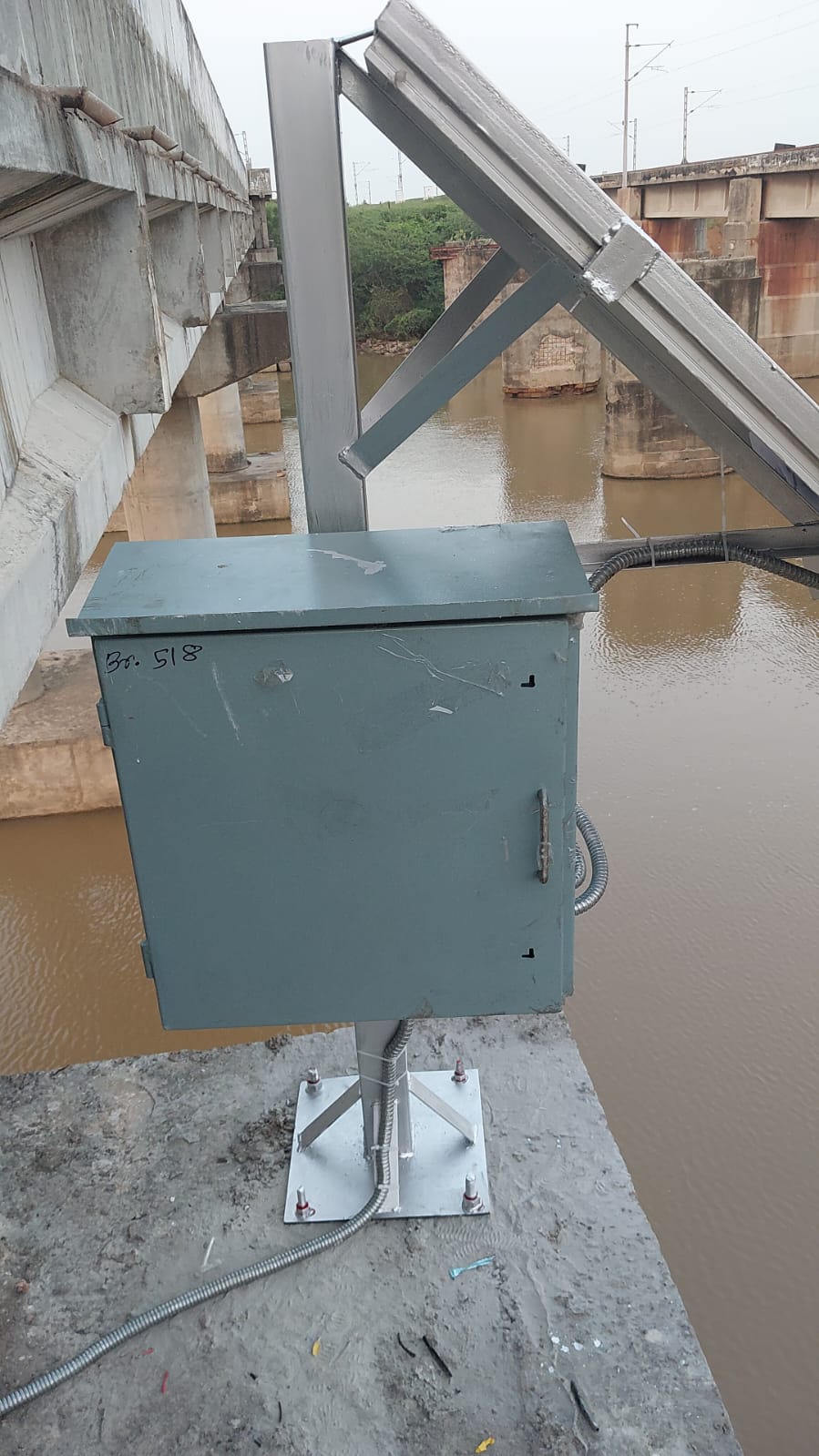
WLMS in the field